

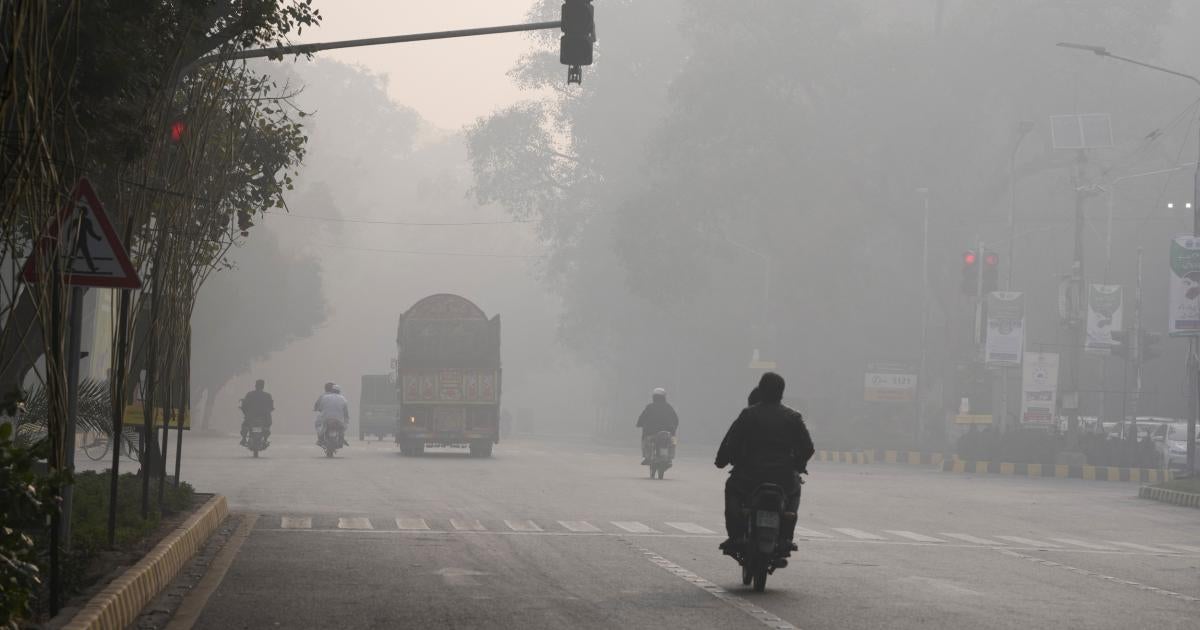
Air pollution in Pakistan is having a devastating impact on people’s health. As global leaders meet at the United Nations Climate Conference, COP28, in Dubai, for the first time the formal proceedings have included a day focusing on health. This is an explicit recognition of the urgent need to address the health impact of climate change.
The World Health Organization (WHO) describes air pollution as the “single biggest environmental threat to human health,” and estimates that 99 percent of the world’s population live in locations that are above WHO thresholds to protect health. Pregnant people, children, older people, people with disabilities, people with conditions such as asthma, and socially and economically marginalized populations are more likely to be exposed to or adversely affected by toxic air.
Fair Finance Pakistan, an organization working to address the impact of climate change, has estimated that air pollution leads to at least 128,000 deaths in Pakistan every year; the real number is likely higher.
According to the Air Quality Life Index, air pollution in Pakistan shortens average life expectancy by 3.9 years. Of Pakistan’s cities, Lahore, the capital of Punjab province with a population of over 13 million, is worst affected, with air pollution cutting life expectancy by 7 years. Lahore consistently ranks among the worst cities in the world for the quality of its air.
Burning fossil fuels for transportation, heating fuel, waste incineration, electricity generation, and other industrial activities are responsible for increasing levels of air pollution. The destruction of green spaces in Lahore, replacement of agricultural land with concrete structures, crop burning, and lack of a viable public transport system has contributed to worsening air pollution.
Under international human rights law, Pakistani authorities have an obligation to protect their citizens’ rights to health and life. With respect to air pollution, this means monitoring air quality and putting in place measures to protect those most at risk when pollutant levels are high. The government should introduce regulations to limit air pollution, enforce rigorous air quality standards, transition away from fossil fuels, and develop more green spaces for urban communities.
At COP28, Pakistan should join with other countries in calling for a complete phaseout of fossil fuels.


